

A Time of Change – A Time for Vision
The global digital economy continues to evolve and innovate, and the pace of change feels relentless. In the mainframe world we face our own elements of change, including a retiring workforce, change around the ways of working (Git/IDE/CI/CD), change to support mainframe modernization, as well as the hulking shadow of new technology such as AI/ML.
But change doesn’t just happen by itself – all material change requires some initial catalytic energy to imagine, enthuse, and then engage the change. That energy comes from individuals (call them visionaries, agents of change, whatever you will) who dare to imagine a better version of reality, and act upon it.
A Clear View
Many of us recognize the widely published Adoption Curve, below. At its heart, it makes a distinction between the kinds of people who can imagine new ideas and progress, and those who will happily take their cue from others, follow the pack, or even resist change. Statistically, as few as 2.5% of people you speak to will understand a visionary proposition – most people are closed to new ideas being suggested, at least initially. Promoting a “visionary” idea involves finding others who can engage in that way – and may require several iterations of discussion.
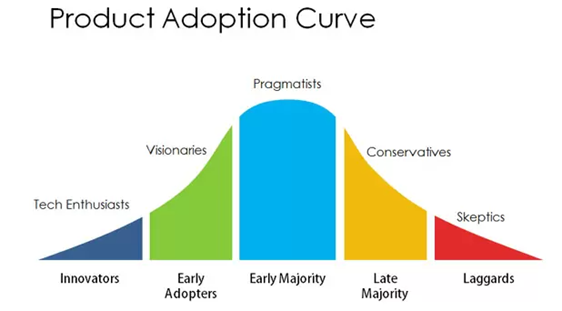
Overall, this needs the visionary to act as an advocate to address any concerns, queries, or objections, and – crucially – to be confident and convincing enough to overcome pushback and cynicism. Enthusiastic visionaries like this are often the true leaders of the technology space, regardless of their job title.
As an example, I am familiar with an American insurance company development team, which was transformed by the efforts of one such visionary individual. They championed using an innovative model for building applications (using an Eclipse IDE), which transformed for the better the way that code was modified. This led to other development experience transformations at that company because they saw not just the value of change, but the positivity and energy that came from the team driving itself forward.
Nobody Left Behind
Which brings me on to the fact that change has a psychological impact on the entirety of the team, for which the visionary must take responsibility to manage. The Change Curve (see below) – typically attributed to the Kubler-Ross model – shows how humans may react to change.
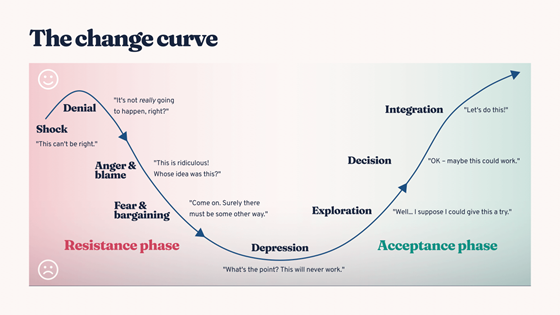
As you can see, it is not a linear path to enlightenment and acceptance – there are rocks along the road to plan for, and to overcome. And for larger teams, of course, this potential for concern or resistance increases with each person affected. This curve also demonstrates that everyone affected by the change will need a motivated advocate to support the culture of the change, not just the new technology and changed processes.
Another example is of an American credit card company, which had already demonstrated the value of DevOps in their distributed development teams, but had ambitions of it being enterprise wide. Armed with the positive experience in one part of the organization, the original advocate moved departments, to drive a similar approach for their mainframe teams, ultimately replicating the same successes.
That organization’s story is by no means unique, but it highlights that different technology stacks should make no difference. In this case, success hinged on having a trusted advocate – with a proven track record – that led everyone through the journey of improvement.
People, Process and Technology – The Vital Ingredients
We’ve spoken so far about individual efforts, and some aspects of technology. But successful change must include three elements – people, process, and technology. Genuine breakthrough change will inevitably include each within its fabric. People’s skills, how work is done, the tooling used to achieve it – they are all up for grabs. It is no surprise that these three tenets are central components of the Agile Manifesto and pervade across DevOps (and its derivatives) and Platform Engineering principles. This diagram is from Christopher S Penn and features in this article on the topic.
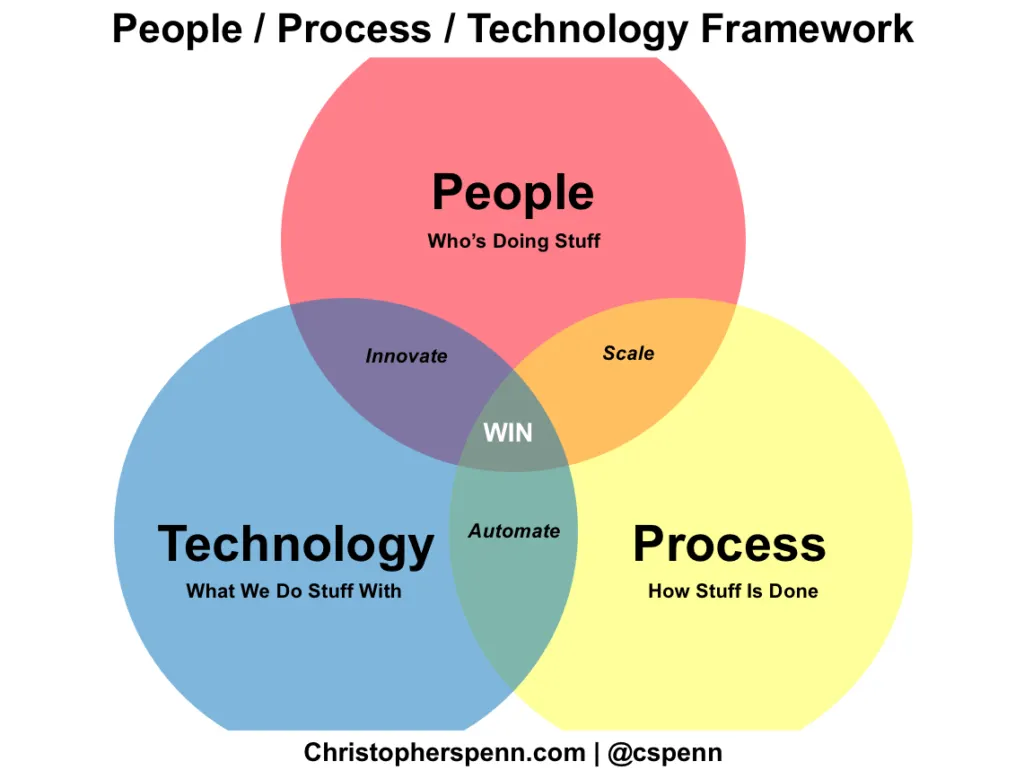
The example I am using here is of a British insurance company looking to accelerate its market release capabilities. Their visionary project leader started with the premise that the team would need to own any mission to improve, so planned the change program around developer sentiment as the core theme. That started a journey that put user experience first, which then instigated a variety of tooling and process changes, and which ultimately resulted in 400% improvement to their mainframe team’s delivery cycles (leveraging, incidentally, our PopUp Mainframe solution).
Observations
As an advocate driving technology change, experience tells us it is essential to focus on the people first. Processes and the technology will get adopted provided there is the vision and passion of advocacy present to ensure that the people get the support and encouragement they need to get to the desired state.
PopUp Mainframe is a fantastic example of technology that can be used to enable accelerated change. Other examples exist, of course, but this is our blog post, after all. And – regardless of technology strategy – successful change hinges on the right vision and advocacy to drive it forward. “Never doubt that a small group of thoughtful, committed citizens can change the world; indeed, it’s the only thing that ever has” – Margaret Mead.